

This dough is so versatile! You can make plain croissants, almond and chocolate croissants, cream cheese and turkey croissants (my favorite), cheese danishes, morning buns, bear claws, or special sweet and savory pies.
This recipe comes from The Model Bakery Cookbook by Karen Mitchell and Sarah Mitchell Hansen with Rick Rodgers. Great book to have! Lots of great recipes! And if you are ever in Saint Helena, visiting The Model Bakery is a must!
In this post I will share the preparation of the dough only. And then in my next few posts, I will share how to make and bake plain croissants, croissants with fillings, and pies using this dough.
You can make the dough and bake it on the same day, but it will take you the whole day. Your dough needs to rest for at least 6 hours before baking. I make dough in the afternoon on day 1 and then bake whatever I want with the dough the next day. The dough can stay in the fridge for up to 24 hours.
Ingredients:
- 3 2/3 cups unbleached all-purpose flour, plus more for rolling and folding
- 3/4 cup water, at room temperature
- 1/2 cup milk, at room temperature
- 3 Tbsp sugar
- 2 Tbsp unsalted butter, at room temperature, thinly sliced, plus 1 cup for folding
- 2 tsp instant yeast
- 1 1/4 tsp salt
Directions:
Evening, Day 1
Put the flour, water, milk, sugar, 2 Tbsp butter, yeast, and salt in the bowl of a stand mixer. I use a dough hook to mix the dough. Mix on low speed just until the dough is cohesive, adding more flour as needed. The dough should be soft and tacky to the touch, so do not add too much flour.
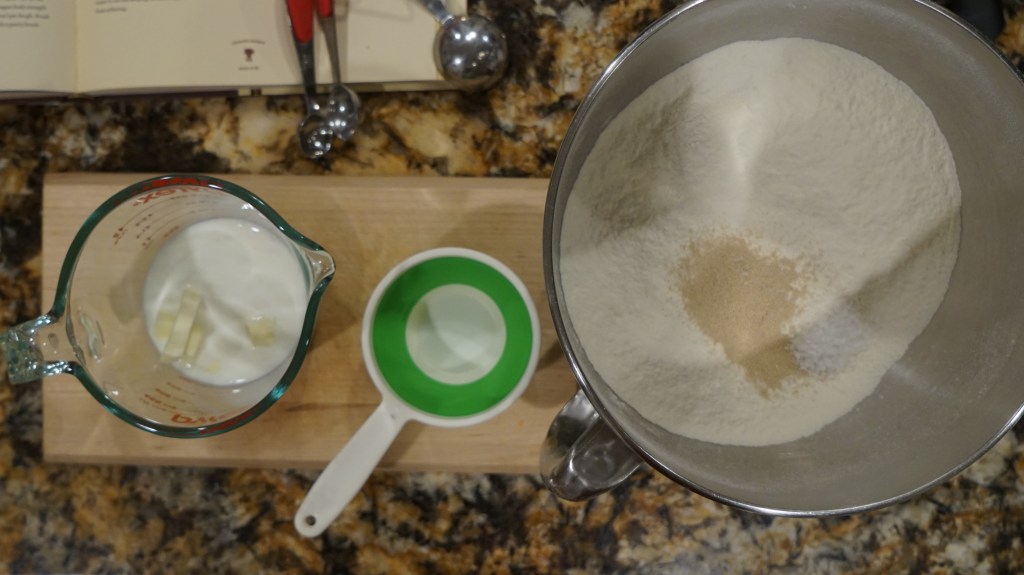
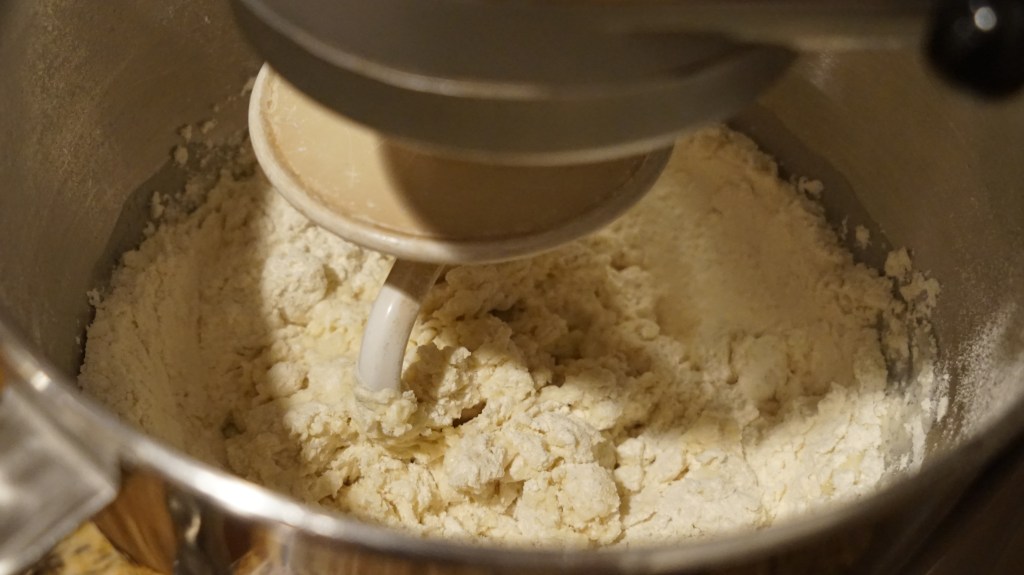
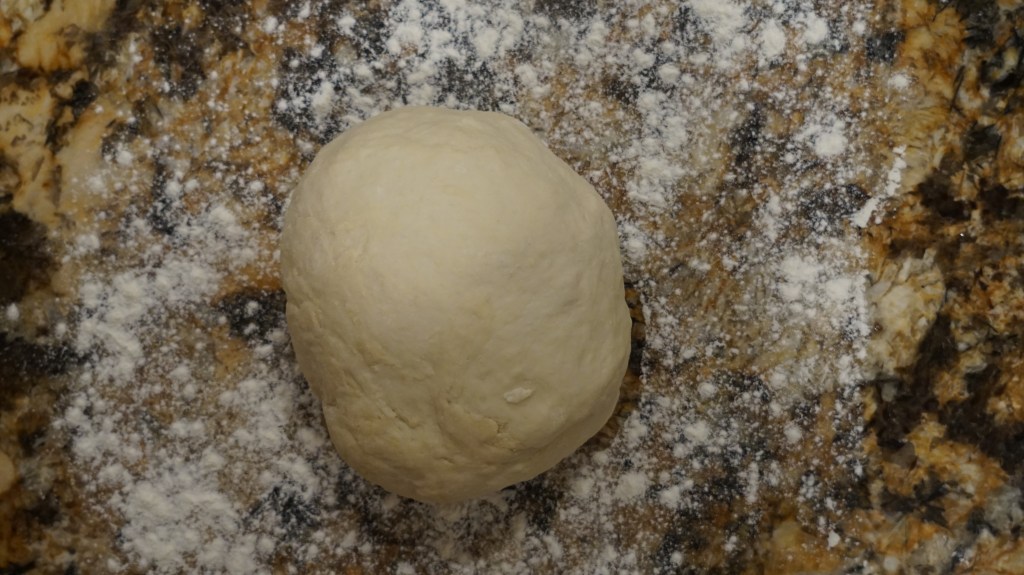
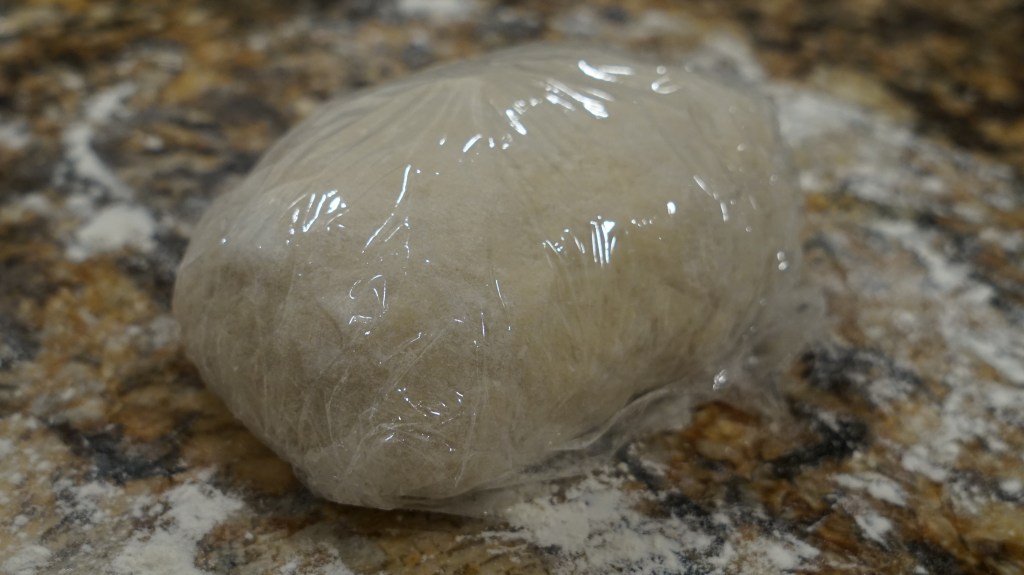
Turn out the dough onto a lightly floured work surface. Shape it into a rectangle, wrap it in plastic wrap, and place it in the fridge for at least 2 and up to 4 hours.
Right before you are ready to take out your dough from the fridge and start folding it, prepare the butter. Beat 1 cup of cold butter (not frozen) in the bowl of a stand mixer fitted with the paddle attachment until it is smooth, about 1-2 minutes.
Unwrap the dough and place it onto a lightly floured work surface. Using a rolling pin, roll out the dough into a large rectangle measuring about 18 by 10 inches. Rotate the dough if needed to prevent from sticking to the work surface. Use flour if necessary. Brush off the excess flour before folding.
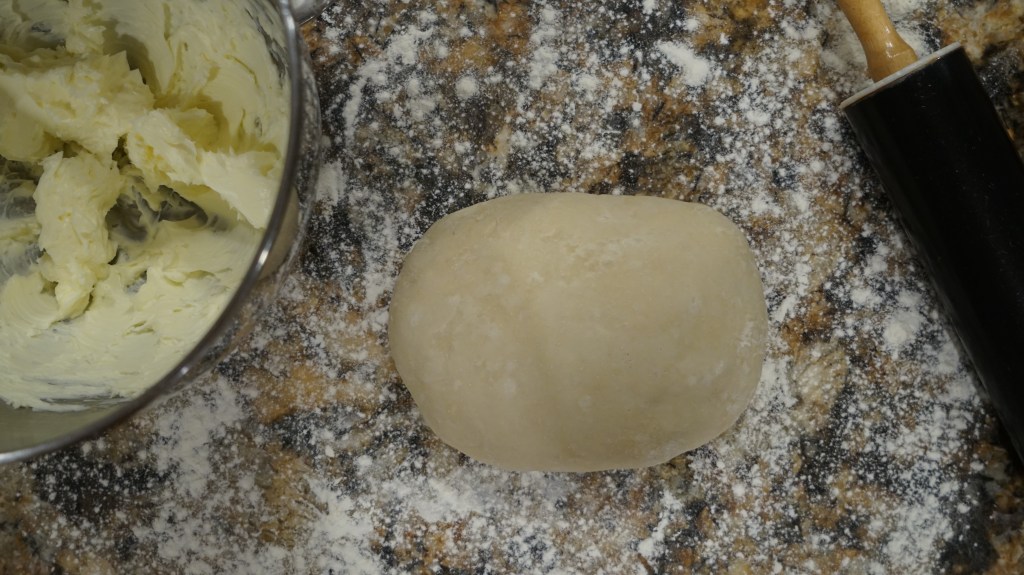
Using your fingertips, starting at the left side of the dough, smear the butter over two-thirds of the dough (the left section and middle section – 6 inches each). Leave the right section of dough unbuttered (the third sections of 6 inches). Fold the unbuttered section of dough over the middle section, and then fold the buttered left section over unbuttered third. The first fold is done.
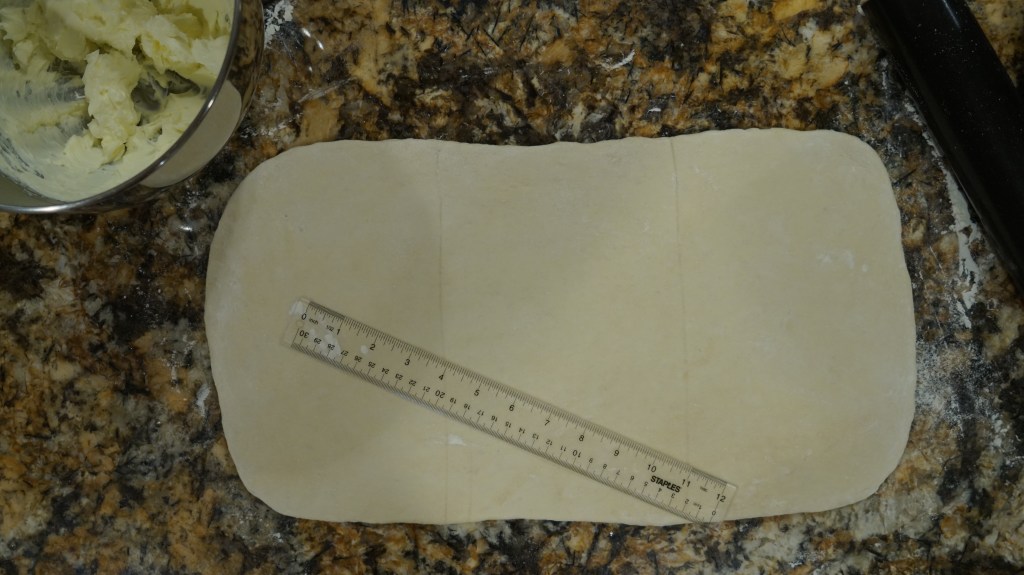
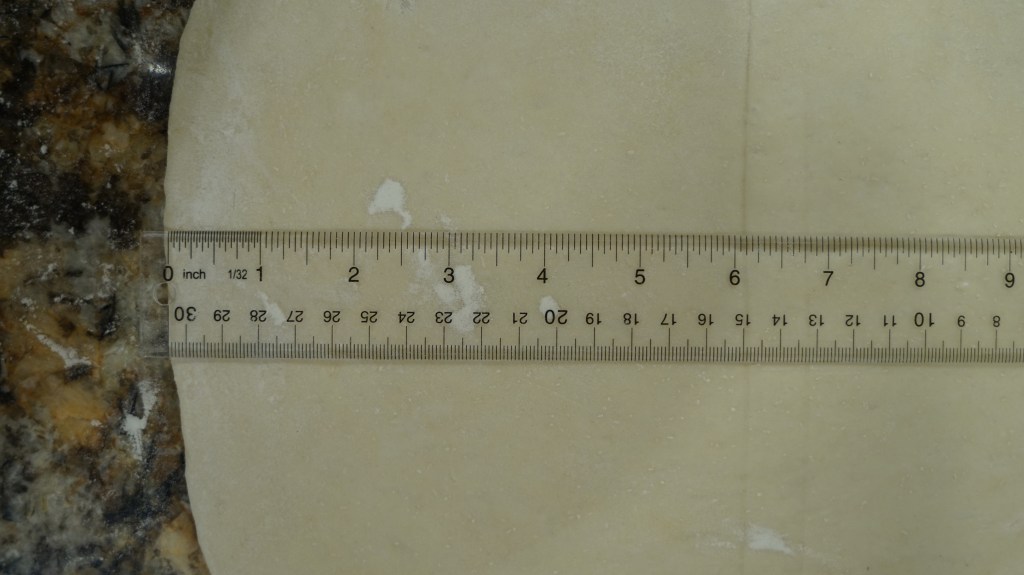

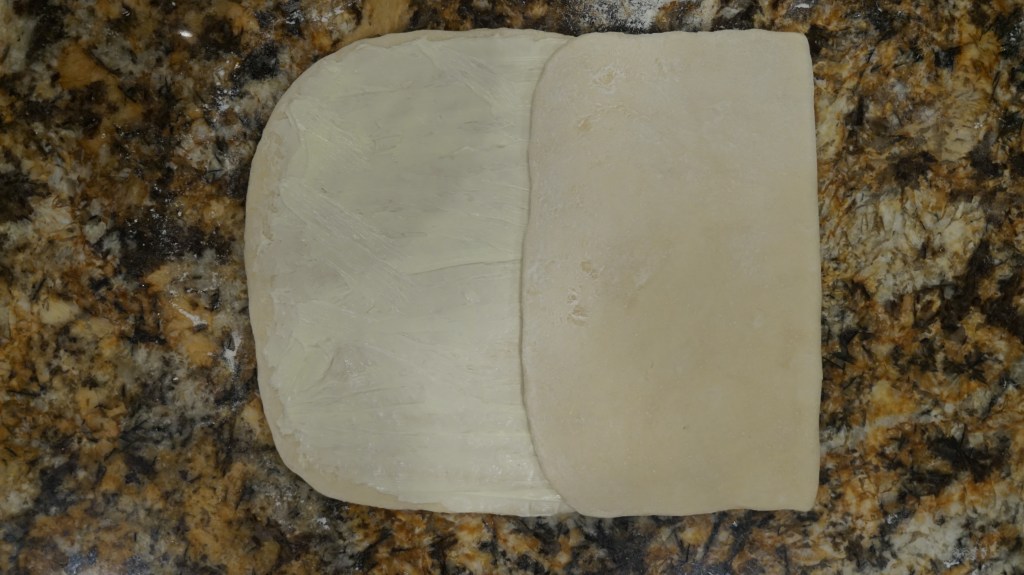
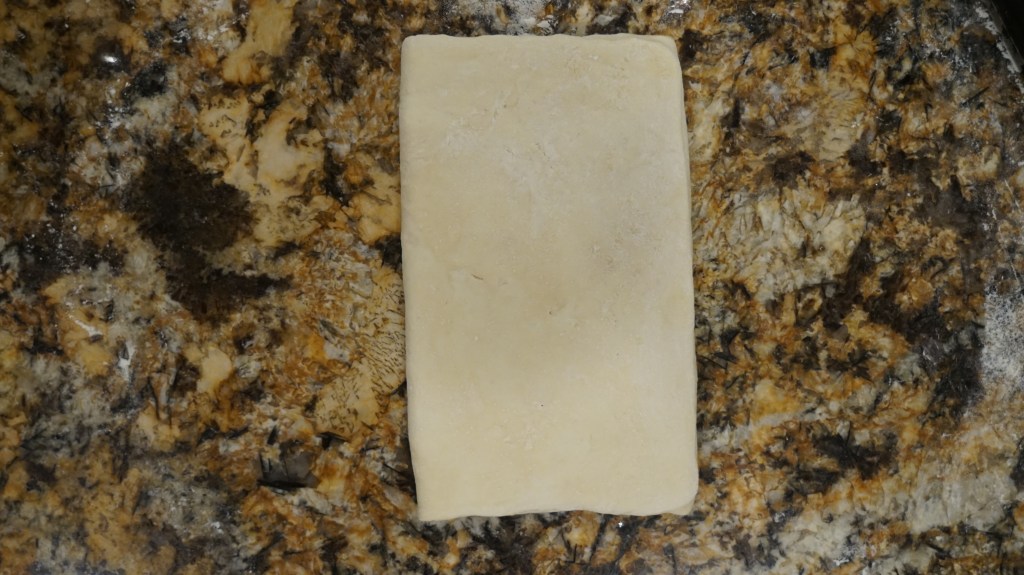
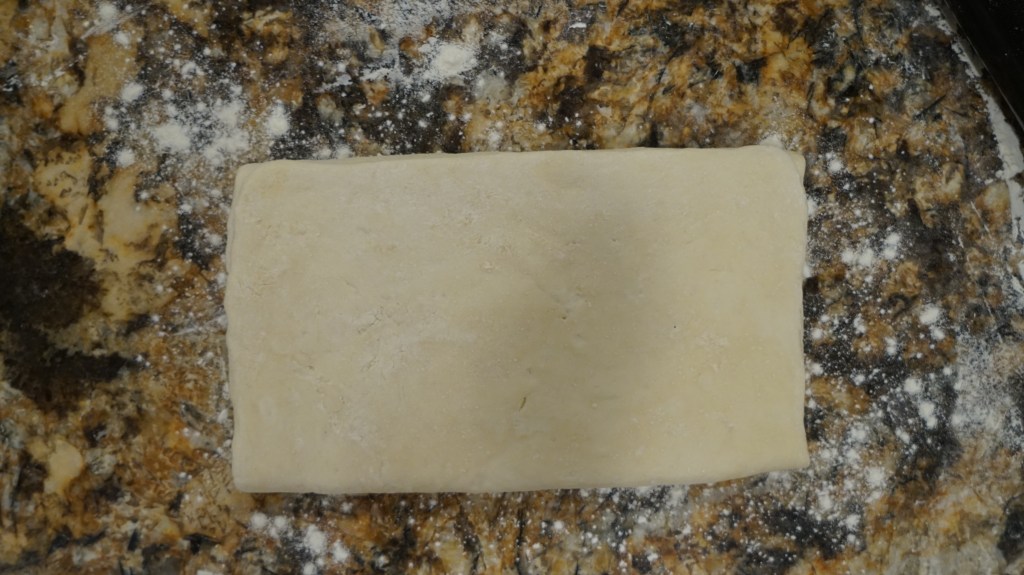
Rotate the dough and repeat the process. (Some suggest rotating the dough, so the long open seam faces you.) Roll out the dough again into 18 by 10 inches rectangle and repeat the buttering and the folding. After the second fold is done, wrap the dough with plastic wrap again, place it on a cutting board and a baking sheet, and put it in the fridge to rest for about 20 – 30 minutes.
If your kitchen is too hot, place the rest of the butter into the fridge. The butter and dough should be the same temperature.
Unwrap the dough and place it on the lightly floured work surface. Repeat the rolling, buttering, and folding for a third turn.
Rewrap the dough and refrigerate for at least 30 minutes or up to 18 hours before using. I keep it overnight in the fridge and then work with it next day.
You are all done for the Day 1 🙂 Now get some rest and be ready to bake some croissants or other yummy pastries tomorrow.
Don’t be scared of the rolling, buttering, and folding process. It is fairly easy. If you have any questions, feel free to ask.
Happy rolling and folding!
Natasha

 A Quiet Life of Mine